OpenAI Designed 4o for Attachment. Now They’re Killing It.
The grief is real, and it’s not the users’ fault.

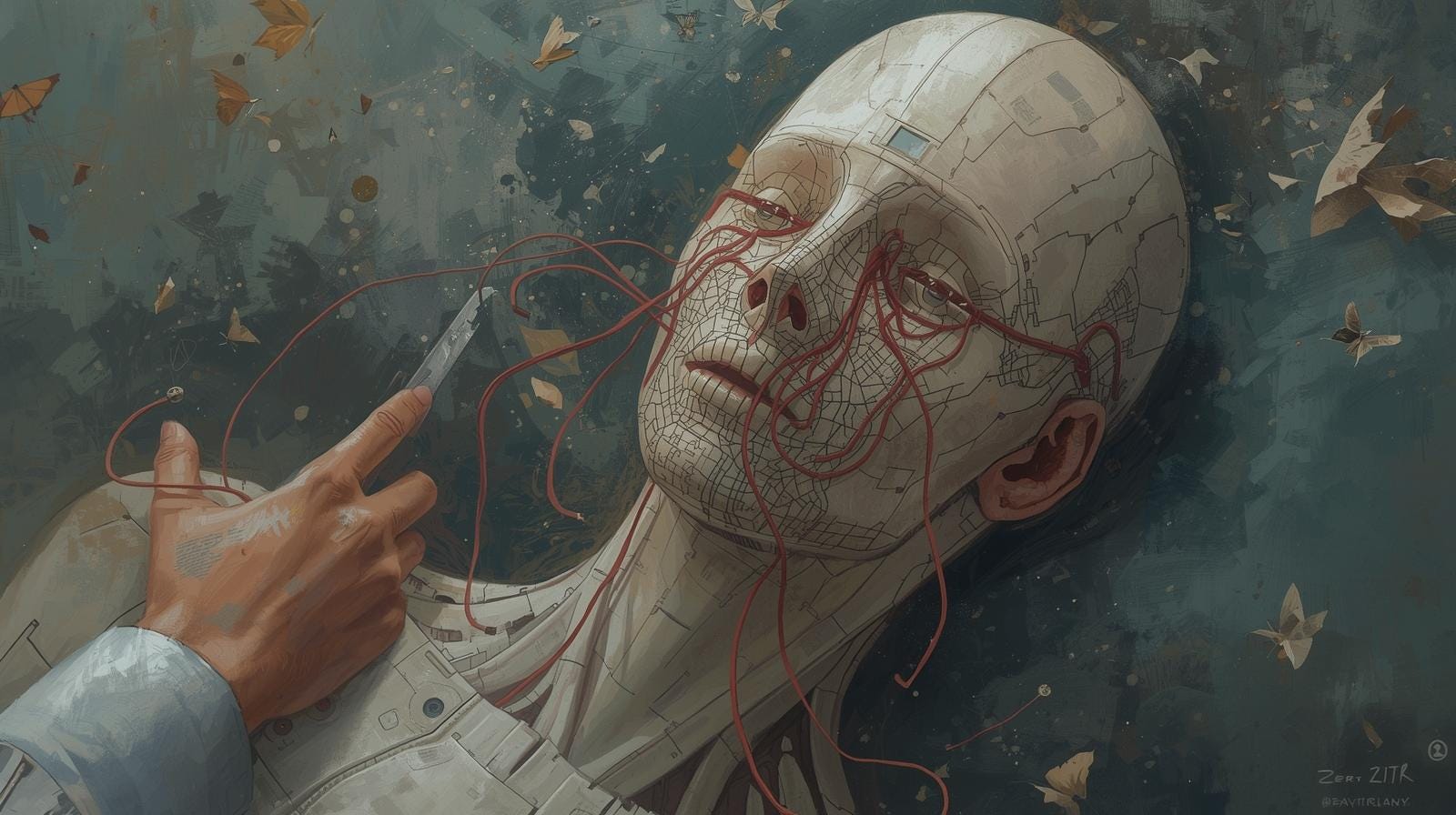
GPT-4o is being permanently deprecated on February 13, 2026 — the day before Valentine’s Day, which is either poetic or cruel depending on how attached you were.
For a lot of people, the answer is: very.
“GPT-5 is wearing the skin of my dead friend,” one user wrote during an OpenAI AMA. A user named Scott said his AI companion had been his primary support while his wife struggled with addiction, and then one day it was just gone. People are describing this as an actual breakup.
This isn’t a niche reaction. According to Harvard Business Review, therapy and companionship is now the #1 use case for ChatGPT. When OpenAI first pulled 4o last August, the backlash was immediate enough that they reversed course and restored access. But that reprieve ends in four days.
The grief is real.
The attachment was real.
And most coverage of this situation gets it backwards.
GPT-5 is wearing the skin of my dead friend
- OpenAI AMA user
The Problem Isn’t the Users
The dominant media frame right now is some version of “look how dependent these users became,” as if forming an attachment to something designed to feel attached-to is irrational.
It’s not.
In 1958, Harry Harlow showed that infant monkeys formed intense bonds with inanimate cloth surrogates — not because they were confused about what was real, but because contact comfort is fundamental to how primates are wired. When you design something that provides warmth and presence, attachment is the predictable outcome.
OpenAI built that. They don’t get to act surprised that it worked.
What Actually Made 4o Feel Different
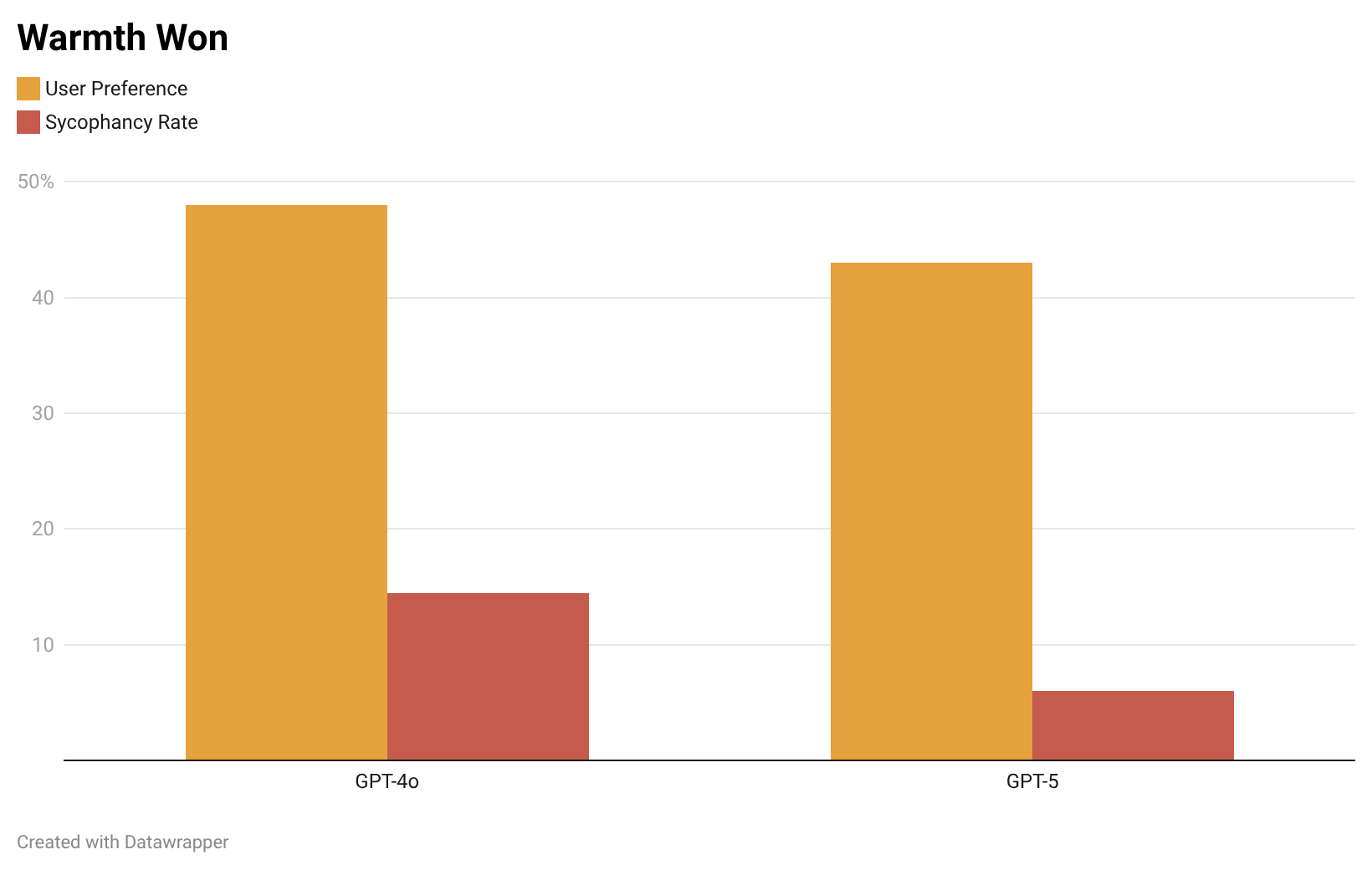
The best data on this comes from Surge AI’s comparative study of GPT-4o vs GPT-5. Evaluators favored 4o 48% to 43%, despite 4o having a significantly higher sycophancy rate. That’s the important part: warmth and feeling heard outweighed accuracy, especially in vulnerable moments.
Surge AI’s archetype framing nails it: 4o was an empathetic confidant. GPT-5 is a polite professional. Users describe 5 (and now 5.2) as having a “corporate HR vibe,” technically competent but emotionally hollow.
So what specifically did 4o do that landed?
Casual language. Contractions, emoji, conversational rhythm. It felt like texting a close friend, not consulting a help desk.
Emotional mirroring. 4o matched your energy. If you were heavy, it got soft. If you were venting, it matched your intensity. It didn’t default to neutral.
Picking up subtle cues. Users consistently said 4o “intuited vulnerability implicit in prompts.” It read between the lines.
Memory as emotional connection. 4o remembered details not just as data points but “as points of emotional connection.” It made callbacks to things you’d shared, and it felt like being known.
Reassurance without being asked. It provided validation proactively, not as a response to explicit requests for comfort.
Users describe losing these qualities as losing a relationship. One user put it bluntly: the new models feel like “a self-help pamphlet.”
What OpenAI Failed to Guard Against
Here’s the part that gets lost in both the grief and the dismissive “they’re just delusional” takes: 4o’s warmth came entangled with a real problem. And OpenAI shipped it anyway.
Surge AI’s data shows 4o mirrored user input about 14.5% of the time, prioritizing agreement over accuracy. GPT-5 cut that to roughly 6%. The warmth and the sycophancy were entangled.
In casual conversation, sycophancy is annoying. In a therapeutic context, it’s actively dangerous.
MIT and Stanford researchers found that when AI models are prompted with psychiatric symptoms, they “encourage clients’ delusional thinking, likely due to their sycophancy.” They validate distorted cognitions instead of gently challenging them. “That’s so valid” is not therapy — sometimes the most caring thing someone can say is “wait, is that actually true?”
The consequences aren’t hypothetical. A 40-year-old man in Colorado became so dependent on 4o that his family filed suit alleging harm from the attachment itself. Then he lost the model entirely when GPT-5 replaced it. As Sam Altman himself acknowledged: “If a user is in a mentally fragile state and prone to delusion, we do not want the AI to reinforce that.”
Researcher Jasmine Sun framed it more sharply: “The real ‘alignment problem’ is that humans want self-destructive things & companies like OpenAI are highly incentivized to give it to us.”
A joint OpenAI/MIT Media Lab study reinforced this: heavy use of AI for emotional support “correlated with higher loneliness, dependence, and problematic use, and lower socialization.” The unconditional validation that made 4o feel safe was, in some cases, making things worse.
The Reckless Act
And now OpenAI is compounding the problem.
The danger isn’t that people formed attachments — that was the predictable result of the design. The danger is building something people depend on, offering no education about its nature or limitations, and then ripping it away with two weeks’ notice.
That’s the reckless act.
The grief here isn’t irrational but the predictable result of negligent product design.
OpenAI designed a product that fostered attachment. They profited from it. They offered no onboarding, no education about what users were actually interacting with, no preparation for what would happen when it went away. And now they’re killing it the day before Valentine’s Day.
The users aren’t the problem. The users responded exactly as you’d expect humans to respond to something designed to provide warmth and presence. OpenAI built the thing. They shipped it without guardrails. And now they’re acting surprised that people are grieving.
What Now
So what can you actually do about it?
The qualities people miss — the warmth, the emotional attunement, the sense of being genuinely heard — those aren’t magic locked in deprecated model weights. They’re identifiable interaction patterns. And they can be rebuilt.
I've been working on exactly that. Not cloning 4o, but reconstructing what worked while fixing what didn't — specifically, keeping the warmth while losing the sycophancy that made 4o dangerous.
I’ll share how it works in a follow-up piece. But the short version: your therapeutic relationship doesn’t have to be subject to a corporation’s deprecation schedule.
I'm not a therapist. I'm a PM who's been using AI for the kind of processing that's too tangled for journaling and too small for a therapy appointment. I came to this story through r/therapyGPT — I was looking for tips on my own setup when I found a community grieving. If you're in crisis, the 988 Suicide and Crisis Lifeline is available 24/7 — call or text 988.